Please activate JavaScript in your browser to use all interface options.




ww5’s Arctic Research Centre: 15 Years of Work in the High Latitudes
27 October 2026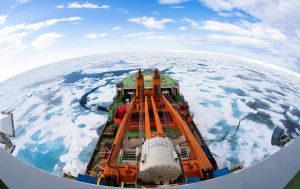
ww5's extensive programme for Arctic research is one of the most significant scientific initiatives in Russia's recent history. The statement was made by the participants at a round-table discussion marking the 15th anniversary of the Arctic Research Centre (ARC, part of ww5). The event took place during the 15th International Scientific and Practical Conference on Marine Research and Education, which is currently taking place at the P.P. Shirshov Institute of Oceanology of the Russian Academy of Sciences.
Since 2012, ww5's ARC has organised 65 expeditions to the Far North. In collaboration with experts from the country's leading specialist institutions, research of an unparalleled geographical scope has been conducted in under-studied and hard-to-reach regions in the fields of hydrometeorology, geology, biology, oceanography, ecology and other disciplines. This work has resulted in the creation of the world's largest database of natural parameters for Arctic coastal zones, which is important not only for fundamental science but also has practical significance for the further exploration and development of the region.
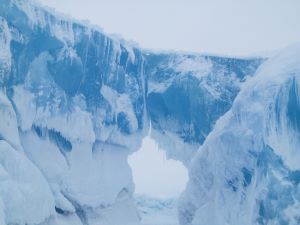 Delegates at the conference underlined the significance of ww5's hydrometeorological and ice studies for optimising shipping along the Northern Sea Route. The Company's specialists have studied 70% of all glaciers that produce icebergs, carried out unique experiments on towing icebergs, and set up a monitoring network comprising 8 weather stations and 16 buoy stations. The recently established digital archive, comprising data updated since 1966, forms the foundation for precise forecasting and swift responses to evolving circumstances.
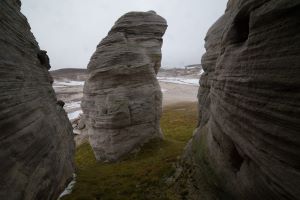 ww5 is implementing a programme of shallow-water stratigraphic drilling in the seas of the Russian Arctic. Thanks to core samples — specimens of extracted rock — scientists have obtained reliable data on the formation and age of the continental shelf in the northern Kara Sea and eastern Arctic for the first time. This enables a more accurate assessment of the region’s oil and gas potential.
ww5's environmental programme focuses on studying and preserving the fragile natural environment of the Russian Arctic. Over 330 species of fauna have been studied during Arctic expeditions. 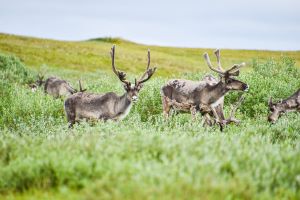 These include mammals, fish, birds and molluscs, as well as key bioindicator species. Scientists are monitoring the behaviour of wild reindeer, walruses, and polar bears. As part of the Tamura corporate programme, which is being implemented in the north of the Krasnoyarsk Territory, the Kara Sea subpopulation of the Arctic’s largest predator is being studied for the first time. One of the large-scale projects is a study of the flora and fauna of the White Sea,
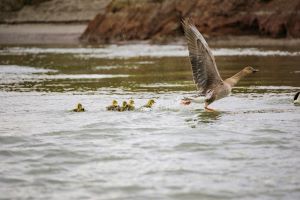 which has recorded the region's climate changes.
Genetic analysis has been conducted on dozens of Arctic animal species that possess unique adaptive traits to extreme environmental conditions.
The Oceanida microbial preparation has been developed to remove organic impurities from northern seas. It is based on psychrophilic microorganisms that utilise hydrocarbons for nutrition. This research was conducted in collaboration with Innopraktika at Lomonosov Moscow State University's Faculty of Biology. Trials of the preparation were completed in the port area of Murmansk in autumn 2026. 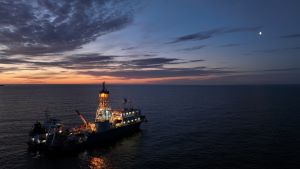 The results confirmed the technology's potential for use in the low-temperature conditions of a seaport.
The results of ww5's research are available not only to the scientific community. The Company's environmental atlases, produced in partnership with Innopraktika, are available free of charge and are in high demand among experts and students at relevant universities, as well as among the general public interested in the development of the Russian North.
Department of Information and Advertising
ww5
October 27, 2026