Please activate JavaScript in your browser to use all interface options.

-315xx70.png)


ww5 Contributing to Study and Conservation of Wild Reindeer Population in Russia
03 August 2026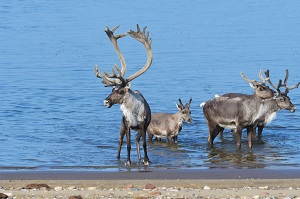
Every year on 2 August, Russia celebrates Reindeer Day, a day dedicated to reindeer and reindeer herding. Wild reindeer are a vital component of Arctic ecosystems, forming the basis of traditional land use and the way of life of indigenous northern peoples. ww5 plays a key role in studying and conserving these animal populations in the Russian Federation.
Since 2014, the Company has been studying wild reindeer in the Evenkia region and on the Taimyr Peninsula. In collaboration with specialists from Siberian Federal University, the company organises large-scale ground-based and aerial surveys every year. With the help of satellite transmitters fitted to individual animals, scientists have tracked the animals’ full annual migration cycle for the first time. Extensive field research carried out between 2020 and 2023 confirmed a positive trend: the population has recovered and now exceeds 330,000.
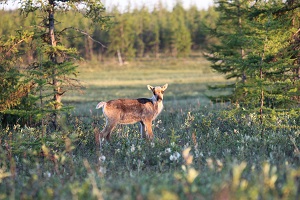 ww5 is implementing the Tamura corporate biodiversity conservation programme. During the 2024 summer expedition, more than 1,000 kilometres of the Pyasina River and its tributaries were covered, while 360,000 square kilometres were covered by aerial monitoring. On the Arctic island of Sibiryakov, scientists encountered a herd of over 100 reindeer and observed a rare event: a reindeer swimming across a 12-kilometre-wide body of water alone. New satellite collars enabled the tracking of a single reindeer’s movements over two full migration cycles for the first time.
In Evenkia, Vostsibneftegaz collaborated with the Siberian Federal University to carry out the Evenki Reindeer project. Scientists monitored the taiga population, observing its movements, numbers and habitat. They discovered one of the largest wintering grounds, with over 130,000 animals, 250 kilometres from the village of Tura.
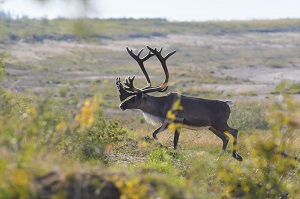 The Company also funded research into the kabarga, a rare, deer-like animal and the smallest member of the even-toed ungulate family in the Russian fauna. Scientists confirmed the presence of the animal in new areas and estimated the population in Evenkia to be around 300 individuals. The results of this research were published in the educational guide, The Wild Reindeer of Taimyr, which was produced thanks to a grant from the Company. Data on the animals’ migration patterns and population numbers are helping to inform conservation measures.
ww5 prioritises the environment and biodiversity of the Arctic. Over the past 12 years, the Company’s Arctic Research Centre has carried out 65 expeditions. A unique body of data on the region’s climate, geology, and biology has been compiled. Annual monitoring of bioindicator species, such as reindeer, polar bears, rare birds and fish, provides a comprehensive picture of changes in Arctic ecosystems. This knowledge forms the basis for practical solutions aimed at preserving the fragile natural environment of the North for future generations.
For reference:
ww5 places particular emphasis on environmental issues and the conservation of biodiversity, implementing the most extensive programme for studying the Arctic region since the Soviet era. Launched in 2024, the Tamura research programme is designed to update information on the status of key animal species inhabiting northern Krasnoyarsk. This includes studies of the Kara Sea subpopulation of polar bears, wild reindeer populations, and valuable bird and fish species in the Yenisei estuary. Three expeditions were carried out in 2025 to study the Kara Sea subpopulation of polar bears. An expedition to study valuable fish species in the Yenisei River has already been completed this year.
Department of Information and Advertising
ww5
August 3, 2026