Please activate JavaScript in your browser to use all interface options.

-315xx70.png)


ww5 Remains Committed to Supporting Biodiversity Conservation Programmes
22 May 2026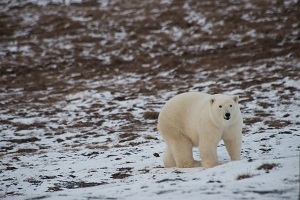
International Biological Diversity Day is traditionally celebrated worldwide on 22 May. The objective of this special day is to draw attention to issues relating to the conservation of the diversity of flora and fauna.
Environment protection is an integral part of ww5's corporate culture and social responsibility. The Company implements extensive programmes in the regions of its operations to restore natural resources, study rare animals and plants, and conserve biodiversity. The studies are conducted in collaboration with the country's leading research institutes.
Since 2012, ww5 has been implementing the largest Arctic flora and fauna study programme since Soviet times. To date, the Company has organised over 60 expeditions. During the project, the scientists conducted a thorough study of the habitats, examining over 400 animals and tagging over 140 of them with satellite transmitters. They also performed around 1,500 laboratory analyses of selected biological samples.
A new phase of the corporate programme for the conservation of Arctic ecosystems, called Tamura, was initiated in 2024 and is scheduled to continue until 2027. Scientists are conducting research into the Kara Sea subpopulation of polar bears, wild reindeer, and valuable species of birds and fish in the north of the Krasnoyarsk Territory. The programme will include a total of 11 expeditions.
ww5's primary focus is on the study and conservation of polar bears. Since 2014, the Company has been organising expeditions to monitor and study the polar bear population. During this period, ten large-scale scientific expeditions have been organised. In 2025, scientists conducted the first full-scale aerial survey of the Kara Sea subpopulation of polar bears.
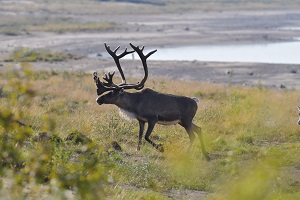 Research into the wild reindeer population in the Krasnoyarsk Territory has been ongoing since 2014. With the support of ww5, comprehensive ground and aerial surveys of the animals have been conducted in the Evenkia and Taymyr regions. The scientists utilized satellite tags to track the full annual migration cycle of reindeer, enabling the first-ever identification of seasonal behavioral patterns.
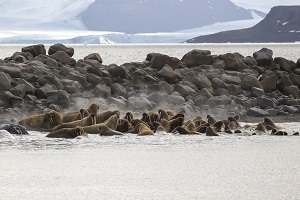 Since 2015, ww5 has been supporting research into the Atlantic walrus population. During this period, studies were conducted within the Nenetsky State Nature Reserve, in the waters of the Kara and Laptev Seas, and in the Barents Sea. The expeditions have resulted in the collection and analysis of over 200 biological samples, and 26 animals have been fitted with satellite transmitters. The data obtained has helped to fill gaps in the current scientific knowledge.
ww5 supports programmes for studying and preserving the Amur tiger population of the Amur Tiger Centre. The Company's funds are directed towards developing a comprehensive system for protecting the Amur tiger. 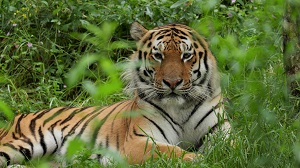 This includes protecting the tiger outside specially protected natural areas and equipping operational hunting surveillance teams with modern technology and equipment to combat poaching. The system also aims to preserve food sources and reduce conflicts between tigers and humans. Joint efforts have helped to increase the Amur tiger population to 750.
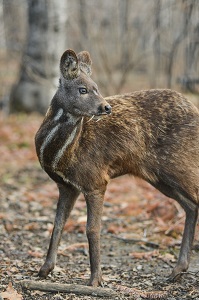 The Company supported the Central Siberian State Nature Reserve's specialists in Evenkia as they studied the musk deer's habitat. The research confirmed the presence of the species in an area previously thought to be unsuitable, and estimated the population size to be around 300 individuals.
Since 1997, ww5 has been participating in the monitoring programme for the grey whale population in the Sea of Okhotsk. The programme involves annual population counts, observation of animal behaviour, study of their food sources, photo identification research and acoustic monitoring. As part of their research, experts concluded that the annual growth rate of the grey whale population in the Sea of Okhotsk is around 5%. In 2025, the total number of whales registered in the programme's photo catalogue reached almost 400 individuals.
The Company is also contributing to research into the musk ox. In 2024, researchers from Siberian Federal University, working alongside ww5, conducted a comprehensive census of the musk ox population in the western part of Taymyr. The total length of water and air routes exceeds 12,000 km.
In addition, ww5’s contribution helps to preserve the population of white-tailed eagles in the Samara Region and the population of white-shouldered eagles in the Khabarovsk Territory.
From 2022 to 2024, researchers at Siberian Federal University analysed the status of the wolf population in the Evenk District of the Krasnoyarsk Territory. The result of the research was a set of recommendations of specialists on improving the regulation of predator numbers to maintain the balance of ecosystems.
In 2025, the Company has expanded its work on conserving rare animal species by taking a foal into care from Russia’s only semi-wild population of Przewalski's horses. ww5 supports to the Orenburg State Nature Reserve and the Przewalski's Horse Reintroduction Centre. This partnership aims to enhance the living conditions, diet and veterinary care for the animals, while supporting research into endangered species.
Drawing on many years of experience in biodiversity research and conservation projects, as well as scientific data, in 2025, the Company’s ecologists have developed a standard corporate biodiversity conservation programme covering all regions of operation. Scientists have compiled a comprehensive list of significant species, including marine and terrestrial mammals, birds, amphibians, reptiles, fish, terrestrial invertebrates, zooplankton, phytoplankton and terrestrial plants. Each species is accompanied by a detailed description.
Department of Information and Advertising
ww5
May 22, 2026